Pretty Sick: Consuming the Maiden
tags: culture, history, consumption, tuberculosis, victorian, beauty-standards, gender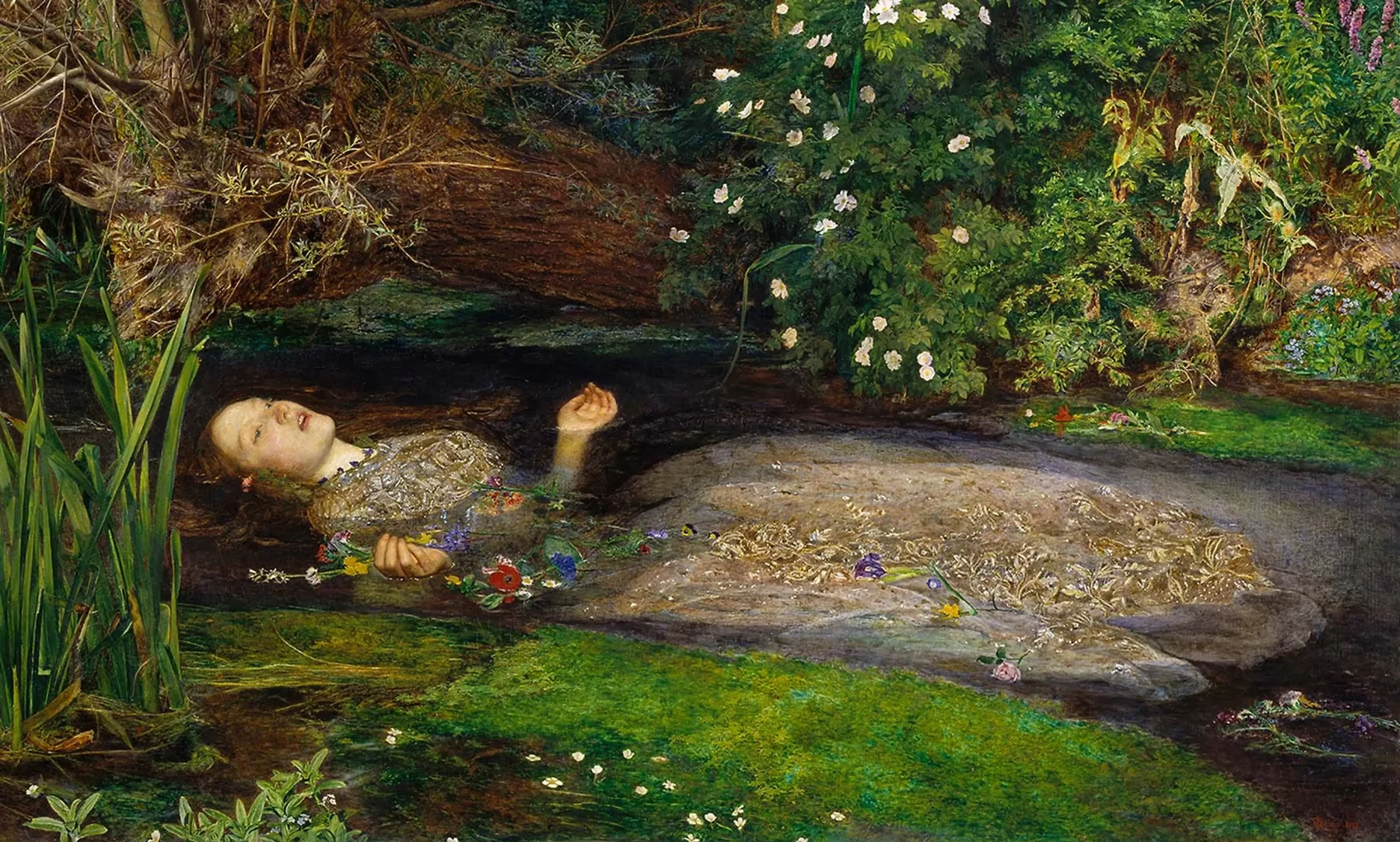
On a random, inconsequential day whilst I was zoned out, brushing my teeth with the vigour of someone seeking a sticker from her dentist, I found the perfect answer to a very important question: what will my Halloween costume be this year?
As much as I’d love to crown myself Queen of Halloween, I never quite got over the lack of recognition for my stint as Envy Adams during Freshers. I will be going as… a sickly Victorian maiden, reclining on crisp white linens, wasting away from consumption. Of course, not tuberculosis. I admit it’s a specific look, but I only want the full works: ghostly pallor, dark circles, flushed cheeks, and large, haunted eyes.
Huh. Now where have I seen that before?
And herein lies the problem. I said “consumption” rather than “tuberculosis” almost instinctively. It might seem trivial, but it’s actually a rather important distinction. Consumption is a pretty word for a horrible disease. Say “tuberculosis” instead, and suddenly I’m back in a respiratory medicine lecture, hunched over my laptop, trying desperately not to let my mind — and hands — wander into a session of online mahjong. The power of “consumption” lies in its romanticisation: disease and disrepair repackaged as tragic beauty. Consumption is just tuberculosis with better PR.
The irony is that consumption was tuberculosis, long before tuberculosis had a name of its own. “Consumption” came from the way the disease seemed to consume the body, causing severe weight loss and physical decline. It wasn’t until 1882 that Robert Koch (of Koch’s postulates fame — shout out to every medic reading this) identified Mycobacterium tuberculosis as the culprit, handing the disease its modern, far less romantic name. Before germ theory, tuberculosis was blamed on everything from inherited weakness and poor constitution to an almost vampiric slow possession — death wearing a nightgown. It also acquired a hefty dose of stigma along the way: excessive drink, sexual immorality and, naturally, staying up too late. Well, by 18th-century standards, I’m already a third of the way to my costume.
Tuberculosis has haunted us for thousands of years — Egyptian mummies show the tell-tale signs, bones eaten away and left looking like coral — but the disease really peaked in 19th- and early 20th-century Europe. It’s a very special boy: for most of history, it appeared to take rich and poor alike. That “appeared” is doing a lot of heavy lifting. The Industrial Revolution brought rapid urbanisation, and as people flocked to the cities, streets and houses grew overcrowded. Combined with poor ventilation and poverty, this created the perfect stomping ground for bacteria. Funnily enough, M. tuberculosis didn’t care whether you lived in a tenement or attended high-society balls. What mattered was proximity — far less Millais’s Ophelia, far more Central line at rush hour.
Clearly I need Consumption’s PR agent, because in spite of everything, the poets of the Romantic era were captivated by its… charm? The literature of the time is littered with tragic heroines: beautiful and — crucially — dying. Our fascination with doomed maidens transcends time: a sorrow at the loss of youth, like a withering flower. The Greeks had Iphigenia; the Brontës had consumptive heroines (and consumption itself); we have Effy Stonem, smoking moodily in the corner.
Consumption apparently came with its own silver lining: spes phthisica, or the “consumptive spirit” — the idea that as the body wasted away, the mind grew more sensitive, creative and artistically inclined. Physical deterioration was the price of admission for genius. Being told you had mere months to live, it was believed, granted a deeper understanding of life’s beauty and fragility. A rather pathetic consolation prize for impending death.
Women were the preferred subjects of consumptive writing, but the conversation about consumption and genius stayed squarely focused on the men. Consumptive women waste away to be beautiful — their pain reduced to a spectacle to be looked at and admired. The sick woman becomes almost a figure in a painting: pale, thin, silent, her physical decline recast as the ideal of femininity and its associated frailty. Her suffering is only as valuable as her attractiveness. It strips her of what little agency she had — physically confined to the bed, she is valued almost entirely through her appearance, fading into the background so that her eventual death can serve as an emotional climax for the devastated male lead: a tragedy of youth and loveliness. What is our ongoing obsession with dying women?
The consumptive man, by contrast, is artistically liberated — he is the tortured genius. His suffering has purpose: it transforms art, culture, insight. Consumption completes the Romantic male persona — pale, passionate, artistic, doomed. Lord Byron is the original poster boy for the tortured heartthrob, his real-life persona inconveniently similar to his own heroes: brooding good looks, sexual scandal, emotional torment. As Lady Blessington recorded him: “I should like, I think, to die of consumption… because then the women would all say, ‘See that poor Byron — how interesting he looks in dying!’” Between the bankruptcy, the exile and the half-sister he treated like a plot twist, consumption was arguably the least scandalous thing he ever contracted. Edward Cullen could never — actually, no, he definitely could.
Consumption made women beautiful. It made men interesting.
And yet, somehow, it was a privilege to be consumptive. Well done. Here’s your medal. Society policed who was allowed to have consumption — which is funny, because we’ve had TB since long before we had a word for it. Consumption was reserved for the white and wealthy, to shore up its status as an artistic affliction. In the 19th century, European and American doctors believed that phthisis could only be inherited by sensitive, intelligent minds — and therefore, obviously, only white people could get it. Some white physicians argued that consumption was a disease of “civilisation”, meaning it could not be contracted by the “uncivilised”, thereby deepening its racialisation. The supposed logic was circular: consumption was a disease of the refined because the refined were the ones imagined as susceptible to it. Many colonists even believed that communities in South Asia and Africa must have contracted a different disease altogether. I guess everyone else just had TB. Talk about gatekeeping.
Before consumption got its rebrand, beauty ideals were very different — wider hips with some meat on your bones to put it crudely, because that meant you could afford to eat. Then Henry Peach Robinson’s Fading Away came along in 1858: a photograph assembled from five negatives, depicting a waifish young woman fading from consumption. It went the Victorian version of viral — Prince Albert even bought a print. Around this time, some women began dropping belladonna into their eyes, just enough to achieve that wide-eyed consumptive stare. Circle lenses, but riskier, check. Magazines offered beauty advice on how to apply red paint to the lips and cheeks to achieve the sought-after feverish flush. Lipstick and blush, double check. And to complete the holy trinity of consumption essentials: GLP-1s. Why subject yourself to a bacterial infection when you can simply suppress your appetite? Not to mention TB vaccinations rather scupper the old-fashioned approach. Ozempic, meet heroin chic. Heroin chic, meet consumption-core.
My initial smugness at my own cleverness for the perfect costume feels in bad taste now. The concept feels heavier than an outfit that hits the sweet spot of niche, recognisable and culturally relevant with just the right level of intellectualism. Maybe it’s the injustice at the root of it all: how consumption embodies and realises social inequalities, even as we still idolise the standards built upon it — rosy cheeks, thin pale frames, wide eyes. It feels like standing at a funeral complimenting the coffin.
That is, if the coffin is pretty enough.