Why Do I Want Shoes That Look Like Feet?
tags: fashion, editorial, tabi, margiela, history, anti-fashion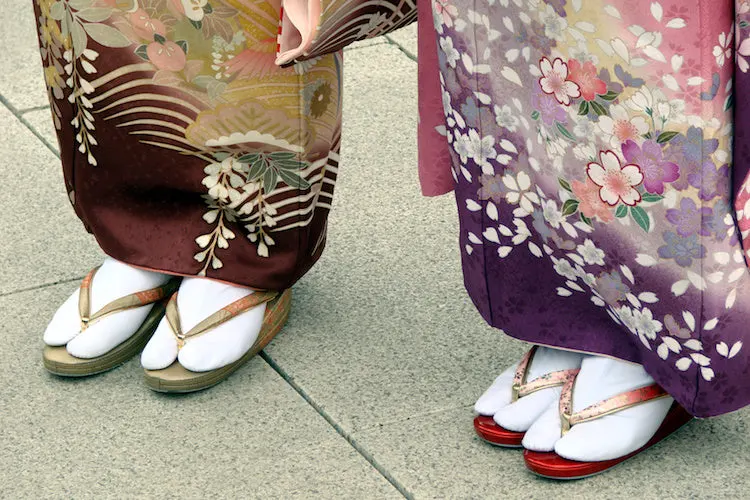
It’s no secret at this point that I’ve reached what can only be described as a slightly unhealthy obsession with ugly shoes and it’s begun to feel like a Problem™. I like my shoes the way many women like their men: just a little bit ugly. For the past few years, I’ve been yearning with a fervour that would make Mr Darcy blush for a pair of Tabis. Two pairs, really — if I’m being honest — a boot and a flat. But I’ll settle for one. A girl’s still got to eat.
And apparently, I’m not the only victim, with duck-webbed boots and barefoot shoes taking the internet — and my FYP — by storm. So, why has our society become so enamoured with shoes that look like feet? And, more importantly, what does it say about us? But first a history lesson.
You’d think the tabi was a relatively new invention, judging by the abrupt spike in interest, but its origins can be traced back to 15th-century Japan as split-toe socks worn with thonged zori and geta sandals. Now some of you might be cringing at that — sandals with socks?! A fashion faux pas, surely? But considering that zori were worn in formal settings, it seems that having your dogs out for business is unacceptable in any era. The split toe shape not only accommodated the thong but was thought to promote physical balance. As cotton became increasingly available in the Edo period, tabi socks became more widespread. With the addition of rubber soles in the early 20th century, the sturdier outdoor jika-tabi was born, which became the standard footwear for manual workers. The rubber allowed for so much more grip that jika-tabi boots were even worn into WW2. Bet that puzzled the Allied troops.
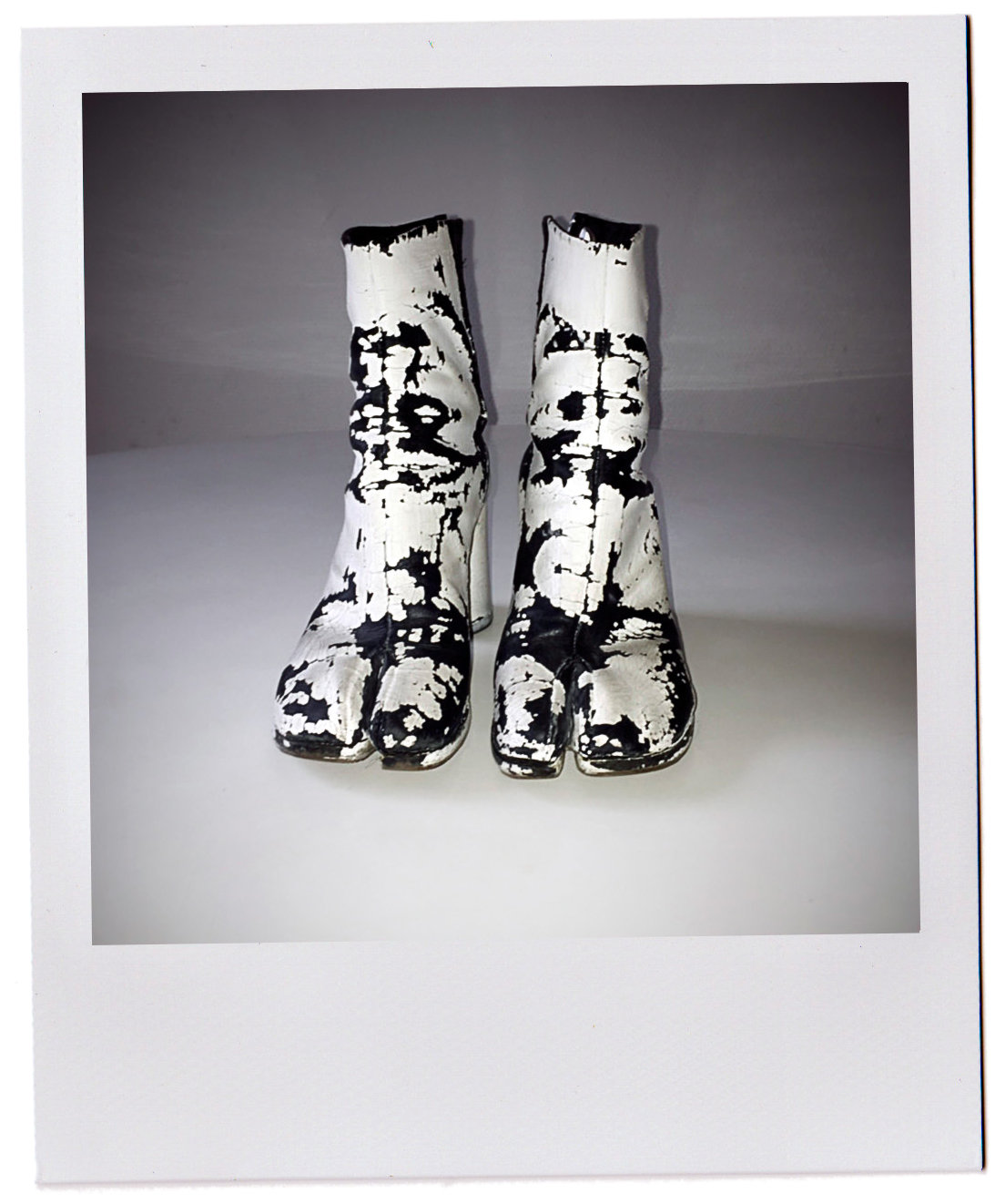
The tabi boot made its first fashion debut in 1988, when Martin Margiela made his models trample in red paint before strutting the runway. Ever since then, the tabi has been a house code of the brand, and soon after, fashion’s trendsetters embraced it as the ultimate weird-girl shoe.
Tabis have now gained traction beyond the fashion in-crowd and become… mainstream? It has become a symbol of elevated taste — it says “I’m not basic” in the most basic way possible, because everyone and their mother has them. What was once a secret code for those in the know has now become a fad. You’re just another trainer with that Pokémon everyone has.
Goodbye shiny Mew. Hello Magikarp.
But really, why should it be an ick that other people also love the things you do? It raises the question: do we value things because we enjoy them, or just because no one else has them, and we want to appear special? It was never really about the shoe. It was about what the shoe represented. Cliché. Because what you pay for is entry to an exclusive gentlewomen’s club — one that likes to boast high-brow taste, where fashion is ‘intellectual.’ What mattered was indicating that your style was just that little bit weirder, a little bit smarter than everyone else’s. You didn’t just like fashion. You liked CLOTHES.
In modern society where everyone looks and dresses the same, maybe we cling to the wacky and the weird to differentiate ourselves from others for fear of crippling mediocrity. That’s the core of gatekeeping. Avril Lavigne had it right on the nose when she said, “I’d rather be anything but ordinary, please.” That’s the truth uglier than the shoe — how much did I like the shoe and how much did I like what it said about me?
After all, if you’d asked me ten years ago if I would wear tabis, the answer would have been a resounding “no.” Granted, I was ten. But I have this distinct memory of being given tabi socks by my grandmother and flat out refusing to wear them because they felt uncomfortable and “weird.” Oh, to be young and dumb. It is funny, though, how the tables turn — the very thing that makes me love them now was exactly what deterred me from them then.
So why do we, as a society — myself included — feel so drawn to ugly shoes? Once upon a time, everyone was in love with those red-bottomed stilettos. Don’t get me wrong, they’re still iconic, but there’s something… too polished about them. At the end of the day, in the age of perfectly curated Instagram feeds, what we crave is authenticity. The ugly shoe allows that. It doesn’t ask to be accepted or to be perfect; it just exists. It challenges our notions of beauty, and encourages us to sit with discomfort — and then to question that, too. Ultimately, who gets to decide what is beautiful? And why do feet make us so uncomfortable, despite being just another body part?
(Quentin Tarantino, that’s why. But I digress.)
The tabi rejects conventional beauty standards and prioritises high fashion literacy over a male-centred eye of beauty. Still not comfortable, though. The fashion world could never. It has become a central part of the anti-fashion movement — the goal is not to look pretty, not to look slim, not to have a teeny tiny waist, but to ask you to think. The ugly shoe feels like a small rebellion against female objectification.
I’m a self-proclaimed misandrist. That might play a part.
But still, something doesn’t feel right — like that’s only part of the story. We crave authenticity, yet there’s something so ironic about how authenticity costs £800. To liberate yourself from the male gaze, you still need the means to access it. Margiela is a luxury house positioned at the luxury consumer — most of whom, let’s be real, benefit from or contribute to the very system we aim to rebel against by wearing these shoes. The crux of the matter is that the authenticity is performed.
And there’s this paradox I just can’t shake: by consciously rejecting the male gaze — wearing ‘male-repelling’ outfits — are we not still centring men? The aim has just shifted from appeal to disgust. Ultimately, we’re still picking the outfit with the male population in mind.
The shoes are ugly. The system is ugly. My bank balance is uglier.